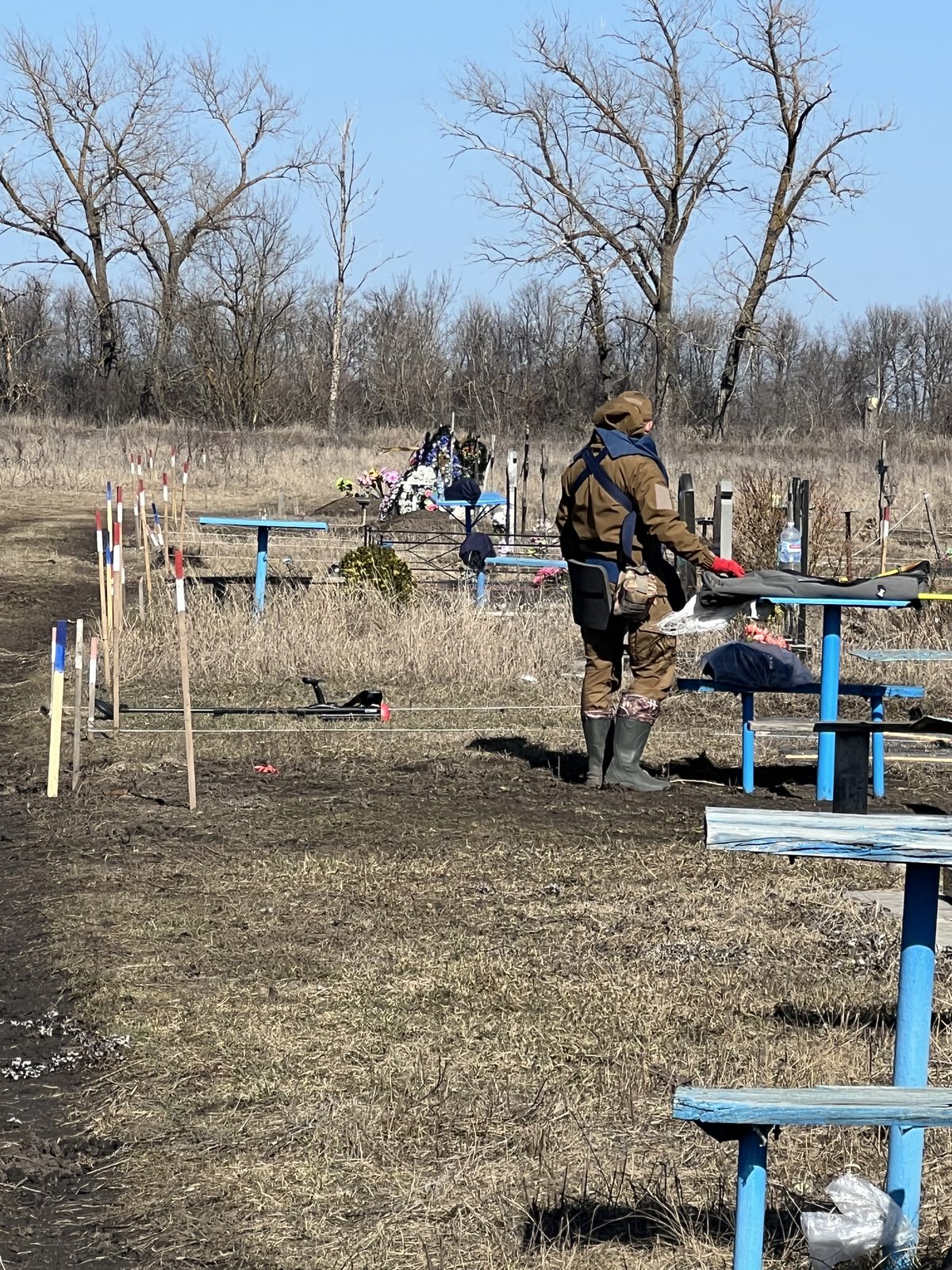
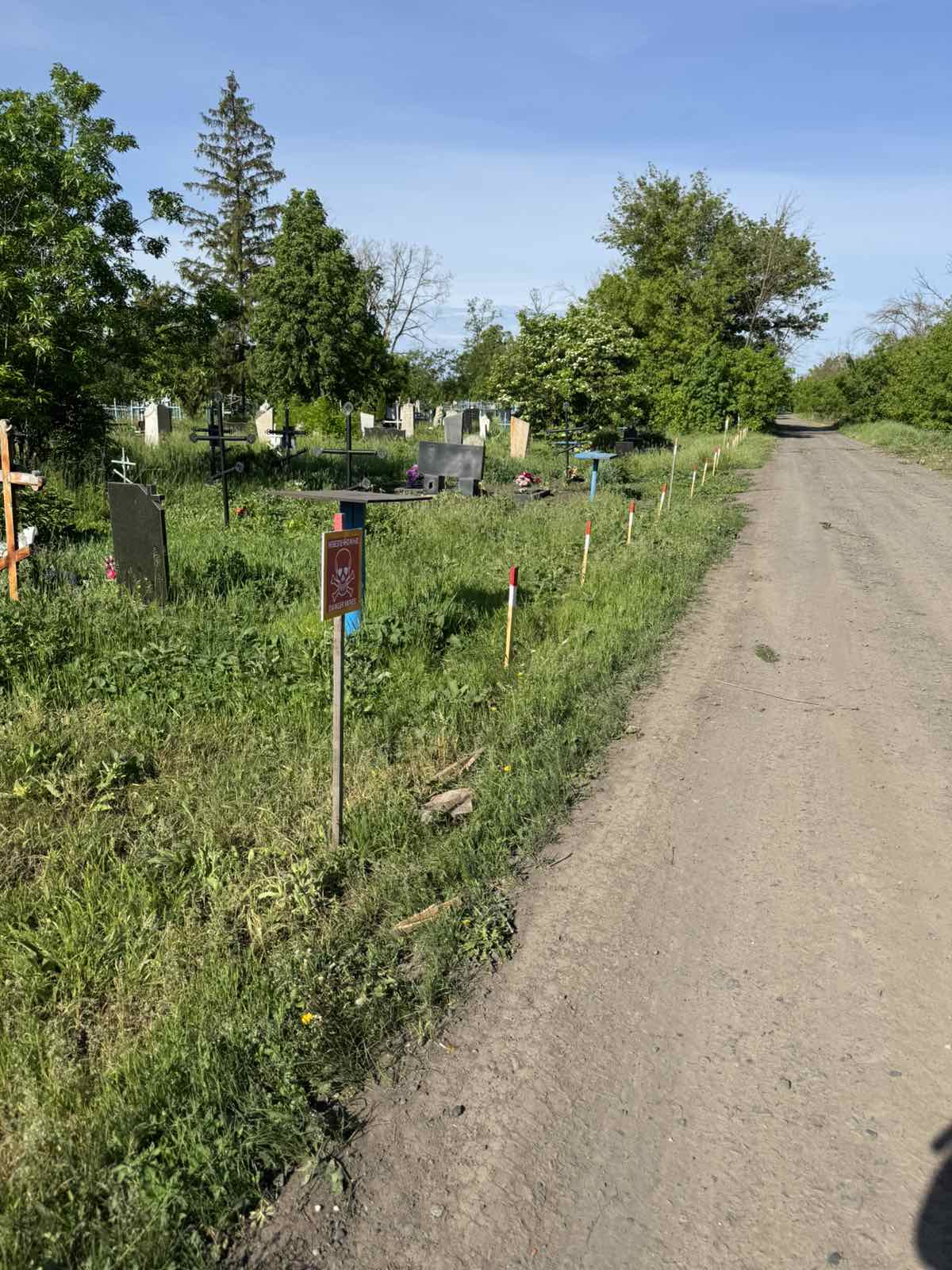
In the de-occupied village of Ivanivka in Kharkiv oblast, families stopped visiting their dead. Not out of grief — out of fear. The two village cemeteries sat inside a former front-line area, and nobody could say what had been left in the grass between the graves.
Since March 2026, Danish Support Group Ukraine has funded the Ukrainian Deminers Association (UDA) to clear them.
The task is two sites in the same village: the New Cemetery, 8,678 m², and the Old Cemetery, 11,158 m². Together, close to 20,000 square metres of ground that people need to be able to walk across without thinking about it.
There is no machine that does this. The work is manual clearance — visual search and metal detector, metre by metre, with the team advancing in marked lanes and every signal in the soil investigated by hand before anyone moves forward. Rain, wet ground, dense vegetation and tree roots all slow it down. So does the war: when there is suspected drone activity overhead, the team stops, withdraws to a safe location, and resumes only once the situation has been reassessed.
Both sites have now been cleared, independently certified and handed back to the community.
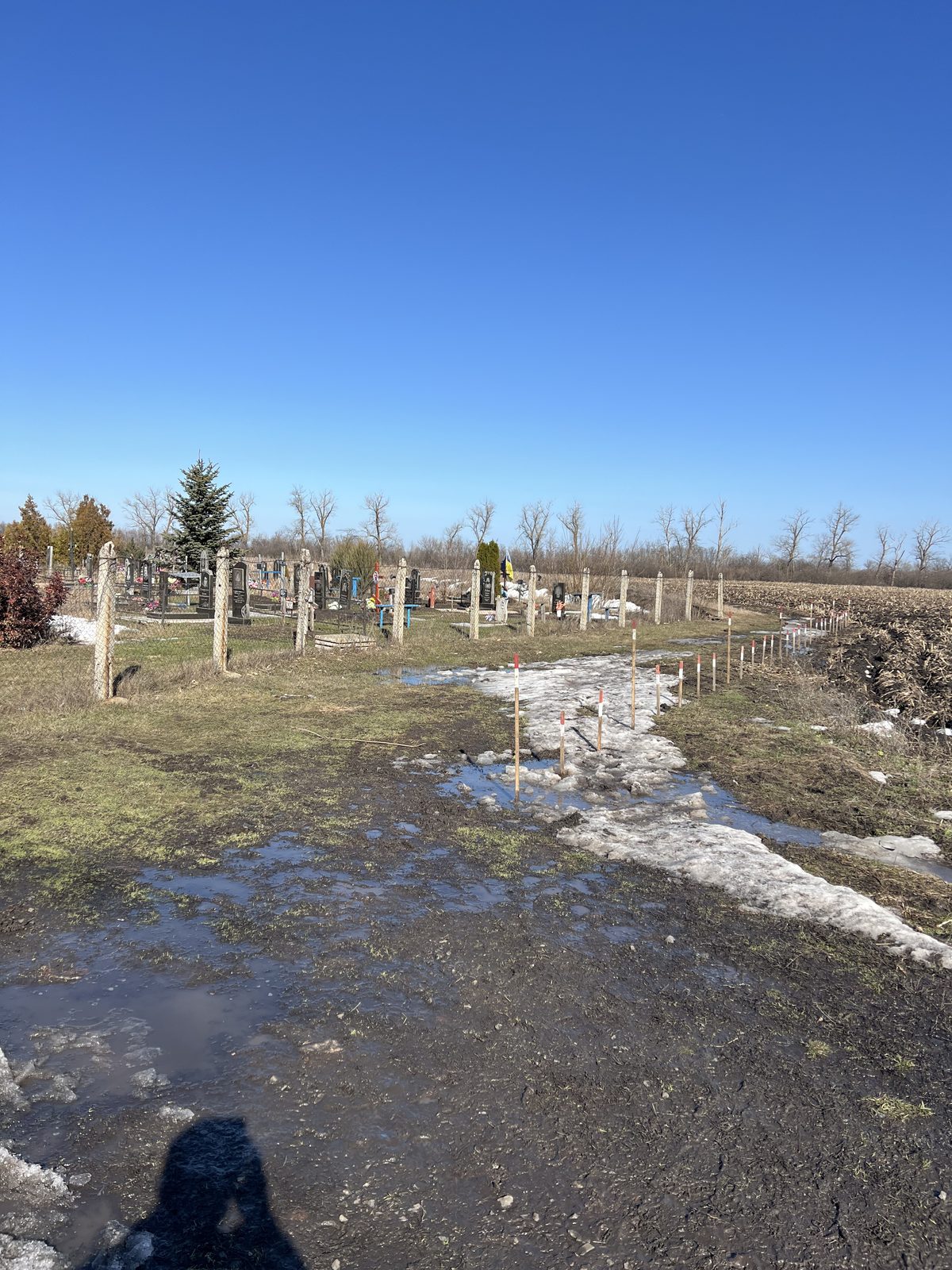
Cleared and released are not the same word. Under Ukrainian national mine action standards, land is only handed back after it has been checked twice: first by the operator that did the work, then by an independent external authority that had no part in it.
The New Cemetery passed UDA’s internal quality control, and then independent external quality control on 10 June 2026, certificate No. 1510. The Old Cemetery followed: clearance was completed on 25 June and external quality control was passed on 23 July 2026. Both sites have been formally released and handed back to the village.
That second signature is the whole point. It is what turns a team’s assurance that a site is safe into a documented, externally verified fact that a community can rely on — and it is why this kind of work takes longer than it looks like it should.
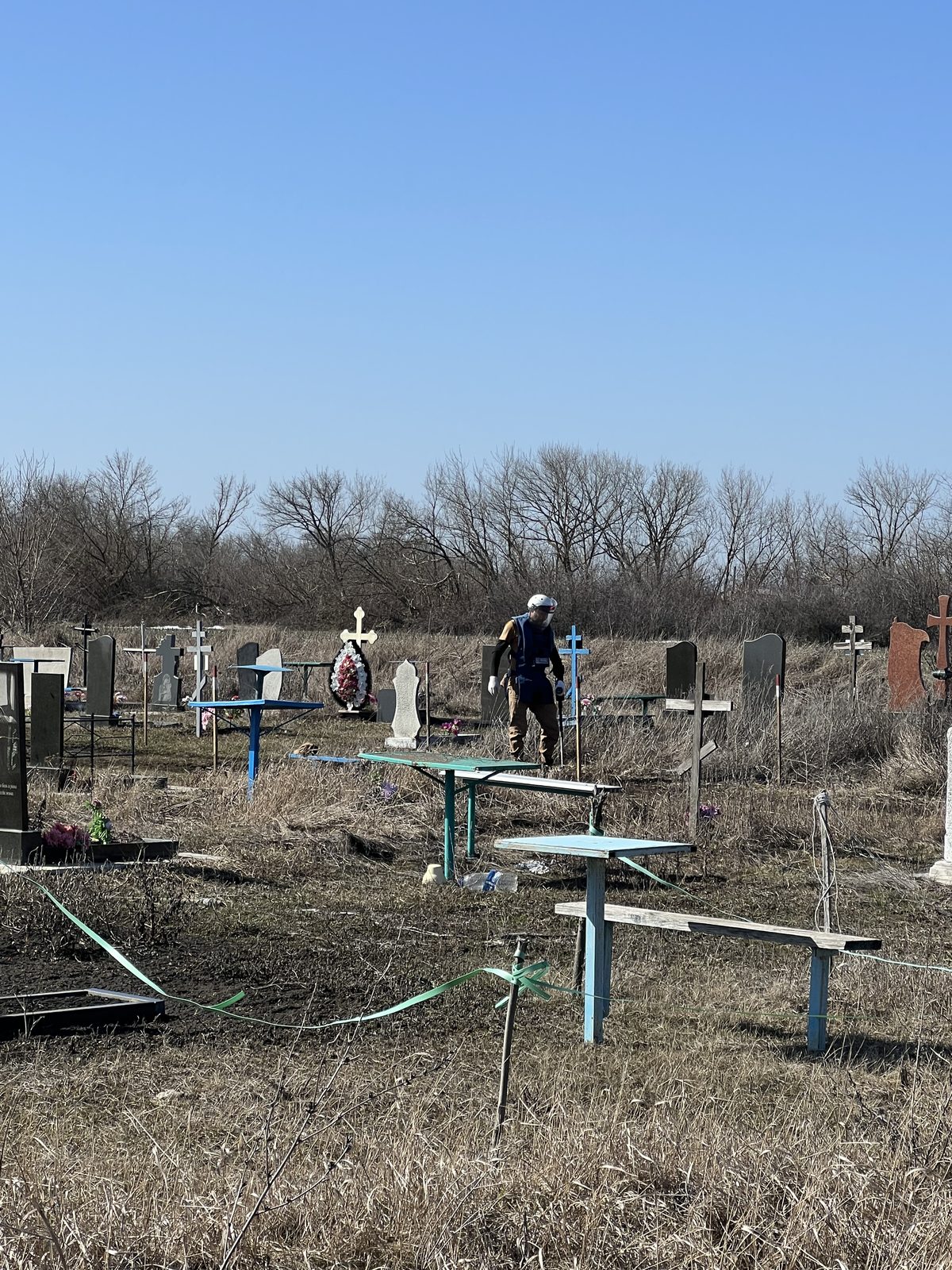
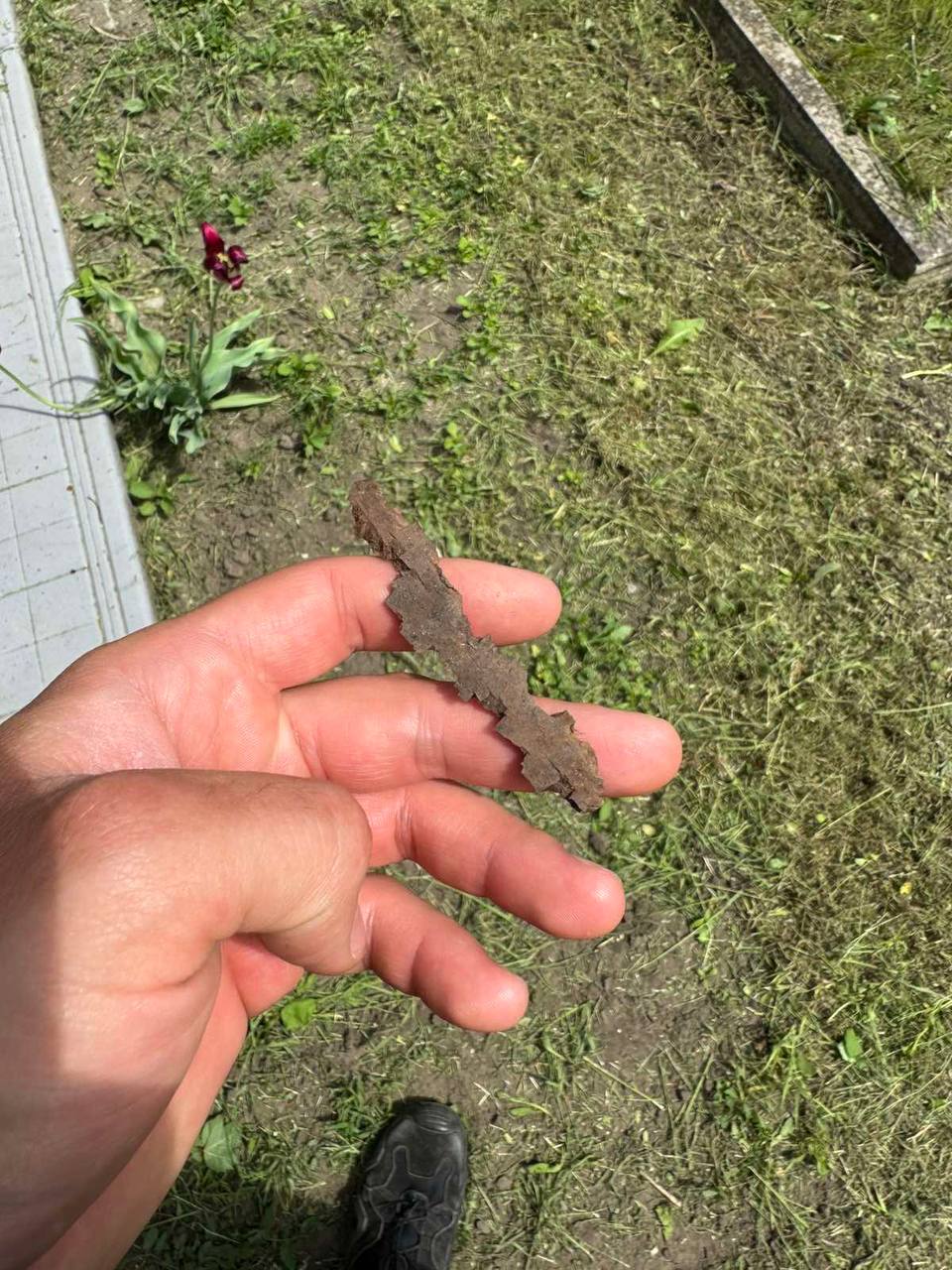
During clearance the team recovered a fragment of a PFM-1 “butterfly” mine — a scatterable anti-personnel mine, small, light, and shaped like something a child would pick up — along with mortar fragments from the fighting that passed through here.
Alongside those, 75 pieces of metal scrap. Every one of them had to be approached as if it were a mine until it was proven not to be. That is where the hours go.
The people of Ivanivka can now bury and visit their dead without a deminer walking ahead of them.
Cemeteries are rarely first in line for clearance. They are not farmland, not a school, not a road — so they slip down the priority lists, and communities quietly live around them for years.
But a village cemetery is where people go on memorial days, where funerals happen, where grandmothers go alone. In practice it is a site the whole community walks across, several times a year, unprotected. Clearing it is a small technical job with an outsized effect on whether a de-occupied village feels liveable again.
At Ivanivka the timing mattered too: the first site was finished around the Easter period, when families come back to the graves in numbers.
The project budget is €132,000, disbursed in two tranches against monthly narrative and financial reporting from UDA. Both tranches have been paid and received, and the project is running under budget.
Rather than let the surplus sit, DSGU approved reallocating the project’s remaining savings into operational equipment for UDA’s field teams — brush cutters and petrol trimmers. Dense vegetation slows down every task these teams take on; this equipment does not stop working when this project closes. It goes to the next minefield.
This is deliberate. DSGU is a small organisation, and we would rather turn a surplus into capacity on the ground than return it as a rounding error.
On 13 May 2026, Espreso.TV featured the Ivanivka clearance in its programme Together to Victory — “Association of Sappers of Ukraine: demining of a cemetery in the de-occupied Kharkiv region.” The four-minute report is available with English subtitles.
UDA is assessing new task sites in Kharkiv oblast for a possible follow-on project. Ivanivka has shown what this partnership can deliver: two sites, independent certification, on budget.
We would like to keep going.
This project is funded by Danish Support Group Ukraine and implemented by the Ukrainian Deminers Association (UDA). Photos: UDA.
Support the work →
Every donation goes into the next square metre.